

Most toothpaste myths survive because they sound sensible: more paste must clean better, a harder brush must scrub better, and a rinse after brushing must be tidier. This post takes eleven of them, one at a time, and checks each against named public sources: the World Health Organization (WHO), the American Dental Association (ADA), Mayo Clinic and a Cochrane review. We also add something a general article cannot: a count of what Philippine toothpaste listings actually tell you, taken from the guides we have already published. It is general information, not medical advice, and your own dentist’s advice comes first.
What we counted on Philippine listings before checking any myth
The WHO fact sheet on oral health (dated 17 March 2025) says twice-daily brushing with fluoride toothpaste at 1000 to 1500 ppm should be encouraged, and its fact sheet on sugars and dental caries (14 August 2025) names too much free sugar, too little fluoride and not removing plaque with fluoride toothpaste as the drivers of cavities. So the one number that matters most on a tube is its fluoride level, and we looked at how often a Shopee listing gives it.
In our guide to toothpaste we read six listings on 25 October 2026. Only one of the six, Sensodyne Repair and Protect, stated its fluoride level (1450 ppm). In our guide to kids’ toothpaste, checked on 16 October 2026, again only one of six, Nature to Nurture Kids Fluoride Gel, stated a concentration (1350 ppm). That is two listings out of twelve. Every one of the twelve had an FDA Philippines notification we could match, but a notification number does not tell a shopper how much fluoride is inside.
Prices differ widely too. In the adult toothpaste guide the cheapest tube was about ₱41.58 per 100 g (Pepsodent Cavity Fighter, 2 x 190 g) and the dearest about ₱248 per 100 g (Sensodyne Repair and Protect, single 100 g tube); both figures are our own division of the listed price by the stated grams on 25 October 2026. A bigger number on the price tag is not evidence of better cleaning, which is the first myth worth dropping.
| What we counted | Result | Where it comes from |
|---|---|---|
| Adult toothpaste listings stating fluoride in ppm | 1 of 6 | Our toothpaste guide, listings read 25 October 2026 |
| Kids’ toothpaste listings stating fluoride in ppm | 1 of 6 | Our kids’ toothpaste guide, listings read 16 October 2026 |
| Listings with a matching FDA Philippines notification | 12 of 12 | FDA Philippines cosmetic notification list, same dates |
| Adult toothpaste price per 100 g, lowest to highest | ₱41.58 to ₱248 | Listed price divided by stated grams, 25 October 2026 |
Myths about how much, when and how long
Myth 1: “The more toothpaste, the cleaner the teeth.” Plaque comes off because of the bristles moving against the teeth for long enough, not because of foam. The ADA’s advice is to brush twice a day for two minutes with fluoride toothpaste. Extra paste mostly means extra foam and more to swallow. For adults a thin ribbon or a pea-sized amount is the usual instruction on tubes; for children the amounts are smaller still (see Myth 11).
Myth 2: “Brush right after every meal, and right after fruit juice.” Brushing after meals is fine for most foods, but not straight after something acidic. Mayo Clinic notes that brushing too soon after an acidic food or drink can take enamel off, and advises waiting about an hour while saliva washes the acid away and the enamel hardens again. If you want to freshen up straight after an orange or a soft drink, rinse with plain water and brush later.
Myth 3: “Brushing harder gets teeth cleaner.” The ADA recommends a soft-bristled brush with gentle pressure, because heavy scrubbing can injure gums. Cleveland Clinic adds that worn bristles can become more abrasive and that over time brushing too hard can contribute to gum recession. A brush with soft bristles and a two-minute routine does more for you than force does.
Myth 4: “Rinse your mouth well after brushing.” This is the myth that surprises people most. ADA News explains that mouthwash used straight after brushing can dilute the fluoride left from the toothpaste and reduce its benefit, and its guidance for rinsing is to spit out the excess and use only a small amount of water, if any. Some dental sources suggest waiting 15 to 20 minutes before rinsing or using mouthwash; treat that figure as common practice rather than a rule. Our guide to mouthwash compares what mouthwash listings state, and the same timing point applies to any of them: use mouthwash at a different time from your brushing if you can.
- Brush twice a day for two minutes with fluoride toothpaste (ADA).
- Spit out the excess; do not rinse it all away with a mouthful of water.
- After acidic food or drinks, wait about an hour before brushing (Mayo Clinic).
Myths about fluoride, “natural” and charcoal toothpaste
Myth 5: “Natural or fluoride-free toothpaste is safer and just as good.” “Natural” on a label describes the maker’s choice of ingredients, not an outcome. The WHO’s position is that exposure to fluoride is an essential factor in preventing cavities and that fluoride toothpaste at 1000 to 1500 ppm should be part of twice-daily brushing. A tube that does not contain fluoride, or does not say whether it does, cannot be compared with that figure. This is why we note it in every toothpaste guide when a listing leaves the level out, as ten of our twelve scored listings did.
Myth 6: “Charcoal toothpaste whitens safely.” Sources we read describe the whitening from charcoal as mostly scraping, so the better it scrubs stains off, the more it can also wear enamel. Consumer and dental summaries report that no charcoal toothpaste has earned the ADA Seal of Acceptance and that many contain no fluoride; one 2019 Brazilian study found a charcoal toothpaste whitened less than a peroxide-based product. Charcoal also turns up in unexpected places. In our toothpaste guide, the Closeup White Now Purple Serum Gel listing (read 25 October 2026) lists “charcoal powder” among its ingredients without explaining why a purple product contains it, and it states sodium fluoride but not a ppm. We describe the listing; we do not rate it as safe or unsafe.
Myth 7: “Whitening toothpaste changes the colour of your teeth.” The ADA says over-the-counter whitening toothpastes and gums are effective mainly at removing surface (extrinsic) stains and will not make a significant difference to stains inside the tooth or to its intrinsic colour. Coffee, tea and tobacco stains sit on the surface; the shade you were born with, fluorosis marks and the darkening that comes with age do not. If a listing promises “whiter teeth in days”, read it as a claim to compare, and see our toothpaste guide for the listings that spell their whitening wording out and where it goes unsourced.
Myths about toothbrushes
Myth 8: “Electric toothbrushes are always far better than manual ones.” The most cited review is Cochrane’s 2014 update (Yaacob and colleagues), which pooled 51 trials with data and 4,624 participants. It found that powered brushes reduced plaque and gingivitis more than manual brushes in the short and long term, but the authors said the clinical importance of the difference was unclear, and most trials had an unclear risk of bias. The best evidence was for rotation-oscillation brushes. So an electric brush is a reasonable choice, especially for people who find a manual brush hard to use, but a well-used soft manual brush is not a failure. In our guide to electric toothbrushes we compare Sonicare, Oral-B and Colgate listings on what the sellers state, not on cleaning results, because we do not test the products.
Myth 9: “Hard bristles remove more plaque.” The ADA recommends soft bristles. There is no support in the sources we read for the idea that harder bristles clean better, and several describe a link between aggressive brushing and gum injury. If your gums bleed or recede, that is a reason to see a dentist, not to change to a harder brush.
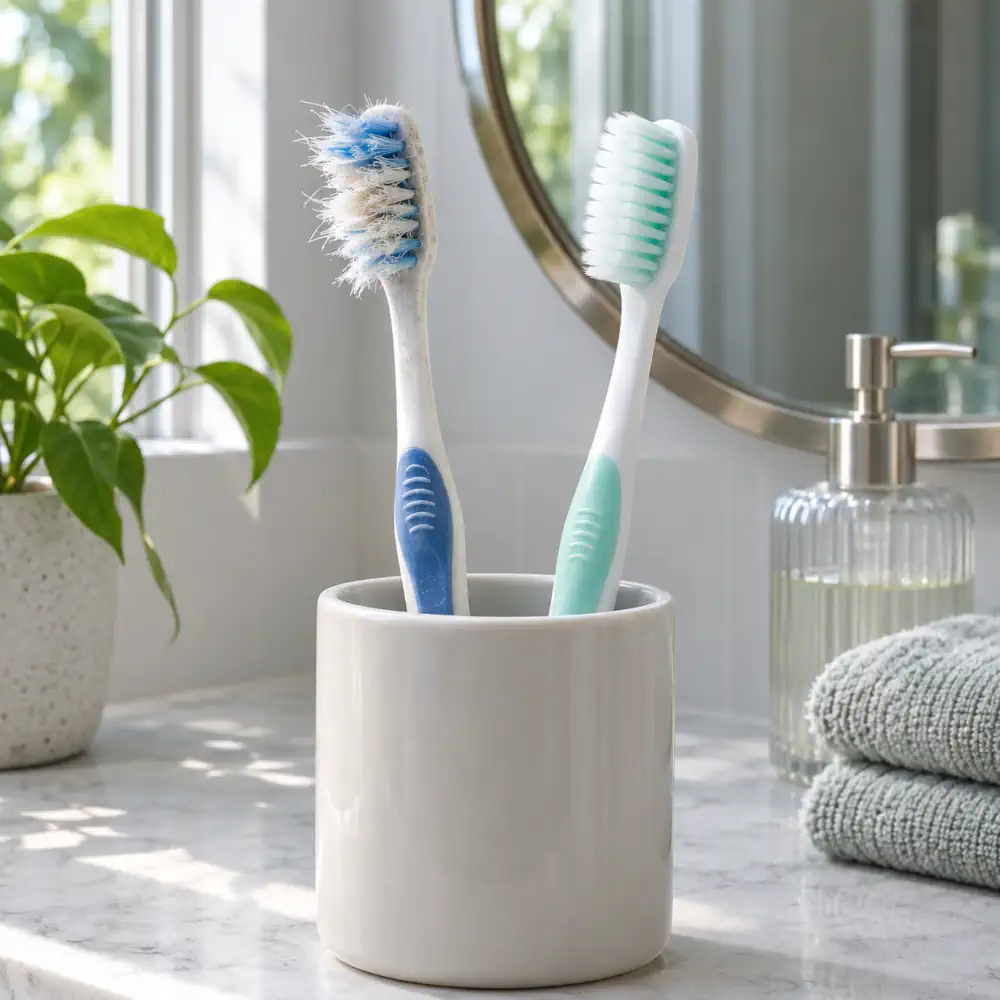
Myth 10: “A brush only needs replacing when it looks worn.” The ADA says to replace a toothbrush about every three to four months, or sooner if the bristles are matted or frayed. The same applies to the heads of electric brushes. A practical habit is to write the month on the handle or set a phone reminder when you open a new brush.
| Belief | What the sources say | Source |
|---|---|---|
| More paste, cleaner teeth | Brush twice daily for two minutes with fluoride toothpaste | ADA |
| Brush straight after acidic drinks | Wait about an hour so enamel can re-harden | Mayo Clinic |
| Hard bristles clean better | Use soft bristles and gentle pressure | ADA |
| Rinse hard after brushing | Spit out; rinsing right after can dilute the fluoride | ADA News |
| Replace only when worn | Every three to four months, or sooner if frayed | ADA |
| Electric is always far better | Modest benefit; clinical importance unclear | Cochrane 2014 |
Myths about children’s toothpaste
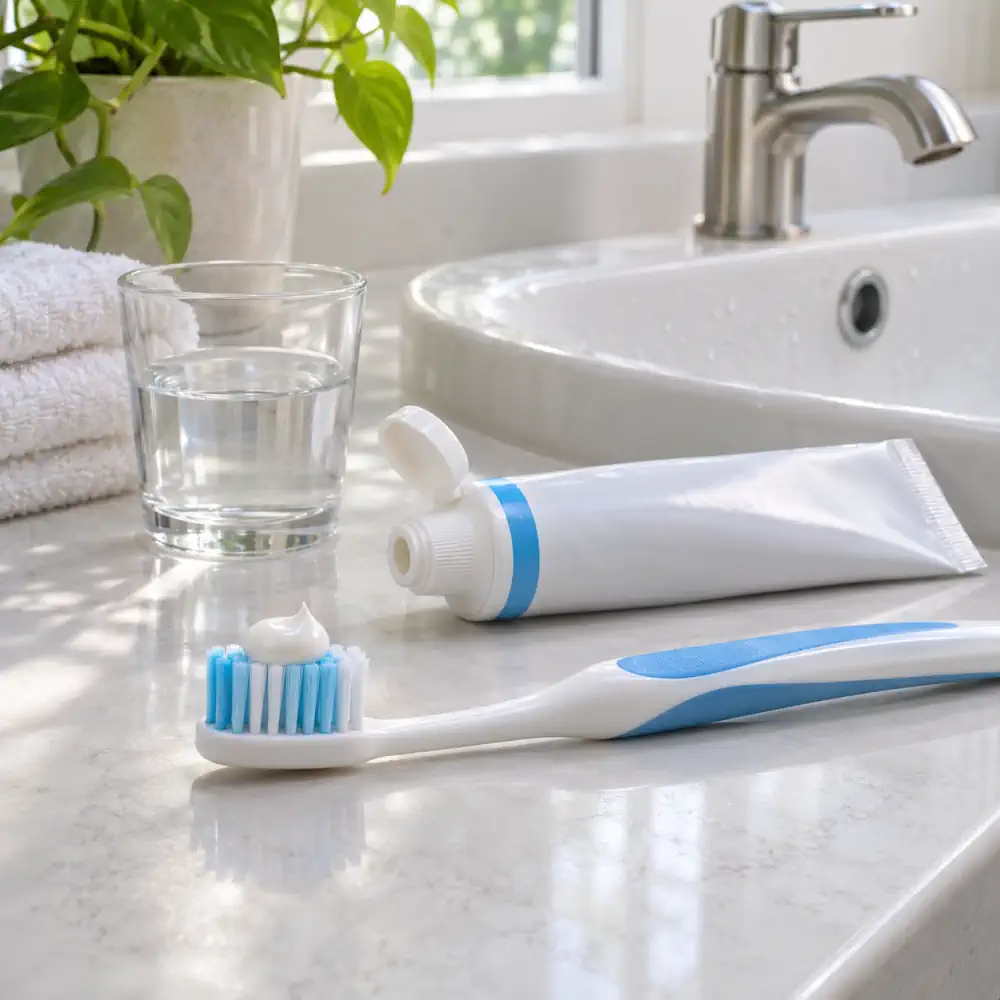
Myth 11: “Children’s toothpaste is harmless, so the amount does not matter.” The ADA’s guidance is a smear of fluoride toothpaste about the size of a grain of rice from the first tooth until age three, and a pea-sized amount from age three to six, with an adult supervising so that the child spits rather than swallows. The reason is enamel fluorosis, a change in how developing teeth look, for which swallowed toothpaste is a recognised risk factor in the ADA’s material. The ADA’s earlier advice used water alone for under-twos and a pea-sized amount from age two, so you may hear older figures from relatives or older leaflets. Ask your child’s dentist what suits your child.
Listings can make this harder, not easier. In our kids’ toothpaste guide the Nature to Nurture listing says both that the paste should be spat out and that a swallowed pea-sized amount is safe, and the Aquafresh Little Teeth listing, which does give pea-sized-amount directions, also calls three-to-five-year-olds “Babies”. Neither listing uses the ADA’s smear-and-pea wording by age. Neither point is a reason to avoid the products; it is a reason to read the label and ask the dentist.
Where mouthwash, sprays and tongue cleaners fit
A last group of beliefs is about extras. Mouthwash and breath sprays can freshen breath, but a fresh taste is not the same as plaque removal; plaque is removed by brushing and cleaning between the teeth. The ADA’s whitening material also points out that some rinses, such as chlorhexidine, can stain teeth with prolonged use, which is one more reason to take dental advice before using any rinse every day. We compared what the listings state, and nothing more, in our guide to mouth sprays and in our guide to tongue cleaners. The tongue cleaner guide shows the same gap as toothpaste: of the adult tongue cleaners we read, the lowest-priced and most-reviewed listing did not state what it is made of.
None of these extras replaces brushing with fluoride toothpaste. If bad breath persists despite brushing, it is worth telling a dentist, since breath can be a sign of gum disease or something else that a spray will only cover up.
How to read a toothpaste listing so myths do not pick it for you
Once you know the myths, a listing is easier to read. Here is the short routine we use when we score a toothpaste:
- Fluoride level. Look for a stated ppm. If it is missing, check the box or ask the seller; the WHO range is 1000 to 1500 ppm for general use.
- FDA Philippines notification. Toothpaste is a cosmetic, so it is notified, not approved. Match the exact product name and check the validity date with our FDA check page.
- The seller. A brand’s own official store, or a long-standing shop, is easier to trust than a weeks-old shop.
- Claims. Treat “dentist recommended”, “whitens in days” and “kills 99.9% of bacteria” as claims to compare, unless the listing says where the figure comes from.
- Price per 100 g. Divide the price by the grams. In the guide above the same job cost anywhere from about ₱41.58 to ₱248 per 100 g.
If you are choosing for a child, add the age range and the amount instructions to that list. If you simply want to compare listings we have already read, our guides do that work and show the date we checked; they are comparisons of what sellers state, not tests of the products.
Frequently asked questions
Is fluoride in toothpaste safe? The WHO recommends fluoride toothpaste at 1000 to 1500 ppm as part of twice-daily brushing, and the ADA recommends fluoride toothpaste in the amounts described above for children. The risk the ADA highlights is children swallowing too much, which is why supervised brushing and small amounts matter. Your dentist can advise on your own situation.
Should I spit or rinse after brushing? Spit out the excess and avoid a big rinse, so the fluoride stays on your teeth longer. If you use mouthwash, use it at a different time from brushing.
How often should I change my toothbrush? About every three to four months, or sooner if the bristles are frayed or matted (ADA).
Does charcoal toothpaste work? The sources we read describe weak evidence for whitening and an abrasion risk, and no charcoal toothpaste with the ADA Seal. We do not claim any product works; see the Myth 6 section for how we describe one listing.
Is an FDA notification the same as approval? No. The FDA Philippines notifies cosmetics, including toothpaste; it does not approve them. A notification means the product is on the list, not that it was tested for any claim.
Limits
This post cannot tell you which toothpaste or toothbrush is right for your teeth. We did not test any product; our counts cover only twelve listings we scored in October 2026, and prices and stock on Shopee and Lazada change. We read the WHO, ADA, Mayo Clinic, Cleveland Clinic and Cochrane material as published summaries on 23 November 2026, so check the original pages for exact wording before quoting them. Opinions on timing, such as waiting 15 to 20 minutes before rinsing, vary between sources. This post is general information, not medical advice; for sensitive teeth, bleeding gums, children’s dental care or any pain, see a dentist.